
English for Professionals: Mastering Your daily Workflow.
Duration: 50 minutes.
Warm-Up Questions.
- What is the first thing you do in the morning?
- What is the very first thing you do when you start your workday?
- What do you do every afternoon?
- What is the last thing you do at night?
Your daily work routine and why we need to talk about it.
1. Present Simple: The Foundation.
Use this tense for habits, facts, and recurring schedules. It shows what is permanent or consistent in your role.
- Rule: Subject + Base Verb (Add -s for he/she/it).
- Example: I manage a team of five and review their progress every Tuesday.
- Why it works: It establishes your core responsibilities and authority.
2. Present Continuous:
Current Focus or Temporary Projects.
Use this for things happening “these days” or tasks that are outside your normal routine. It helps colleagues understand your current workload.
Why it works: It distinguishes between your long-term role and your immediate priorities.
Rule: Subject + am/is/are + Verb-ing.
Example: I am currently implementing a new CRM system for my department.
Rules for Placement.
- Before the main verb: I often attend stand-up meetings.
- After the verb “to be”: She is always punctual.
- For emphasis: Sometimes I work from a cafe.
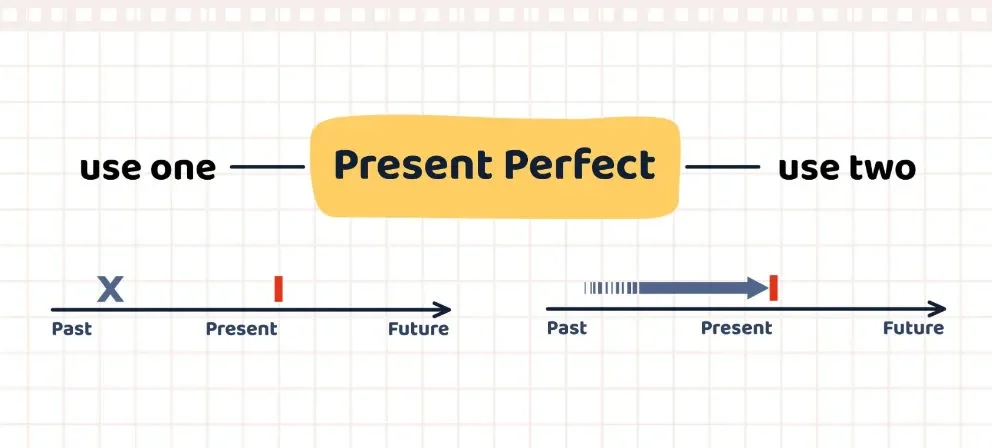
3. Present Perfect:
Results and Achievements.
Use this to describe tasks you have completed within your routine without specifying a exact time. It focuses on the result rather than the action itself.
- Rule: Subject + have/has + Past Participle.
- Example: I have already sent the quarterly reports to the board.
- Why it works: It communicates efficiency and task completion during a busy day.
4. Present Perfect Continuous:
Ongoing High-Priority Tasks.
Use this for actions that started recently and are still taking up your time. This is excellent for explaining what has been “on your plate” lately.
- Rule: Subject + have/has been + Verb-ing.
- Example: I have been working on the budget proposal all morning.
- Why it works: It emphasizes the effort and duration of a specific work activity.
5. Future Simple (Will) or Planned Future (Going to).
Use these to describe the “next steps” in your daily workflow or planned meetings.
- Example (Will): I will follow up with the client after lunch.
- Example (Going to): I am going to host a training session at 3 p.m.
- Why it works: It shows proactivity and clear planning.
The Frequency Scale.
Adverbs of frequency tell us how often an action happens. In business, these words help define your availability and habits.
| Frequency | Adverb | Example |
| 100% | Always | I always arrive on time for meetings. |
| 100% | Continually | They have been continually negotiating since Monday |
| 90% | Usually/Normally | We usually use Zoom for calls. |
| 70% | Often/Frequently | He often works late on Tuesdays. |
| 50% | Sometimes | I sometimes eat lunch at my desk. |
| 10% | Rarely | They rarely miss a deadline. |
| 0% | Never | I never check Slack after 8 p.m. |
Comparison Table: Let’s take a look.
| Tense | Use Case | Business Context Example |
| Present Simple | Regular Habit | I normally check my inbox every hour. |
| Present Continuous | Temporary Activity | We are frequently hiring new developers to scale. |
| Present Perfect | Completed Result | She has recently finalized the contract. |
| Present Perfect Cont. | Sustained Effort | They have been continually negotiating since Monday. |
To sound more human and less like a textbook, mix these tenses.
Start with your general habits (Present Simple), mention what you are focusing on right now (Present Continuous), and end with what you have achieved so far (Present Perfect). This creates a logical “pulse” in your professional storytelling.
Practical Workshop:
Workflow Mapping: Visualizing Your Day.
Professional efficiency relies on repeatable workflows.
Create a simple flowchart of your typical day.
Step 1: Use these verbs to list your tasks.
- Check / Send / Review
- Attend / Schedule / Follow up
- Analyze / Update / Prepare
Step 2: Connect them using frequency adverbs.
End: I sometimes plan for the next day before logging off.
Start: I always review my to-do list.
Middle: I usually have 1:1 meetings. I often prepare reports.
TO-DO TASK (Consolidation + Growth)
The Routine Interview (15 Minutes)
Ask your work partner about their habits.
The goal is to find out how they manage their time.
Questions to ask:
- How often do you check your inbox?
- Do you usually take a full hour for lunch?
- How often do you have unplanned meetings?
Task: Note three things about your partner.
Be ready to share one with the group.
“Sarah usually handles her hardest tasks before noon.”
Lessons selected for you.